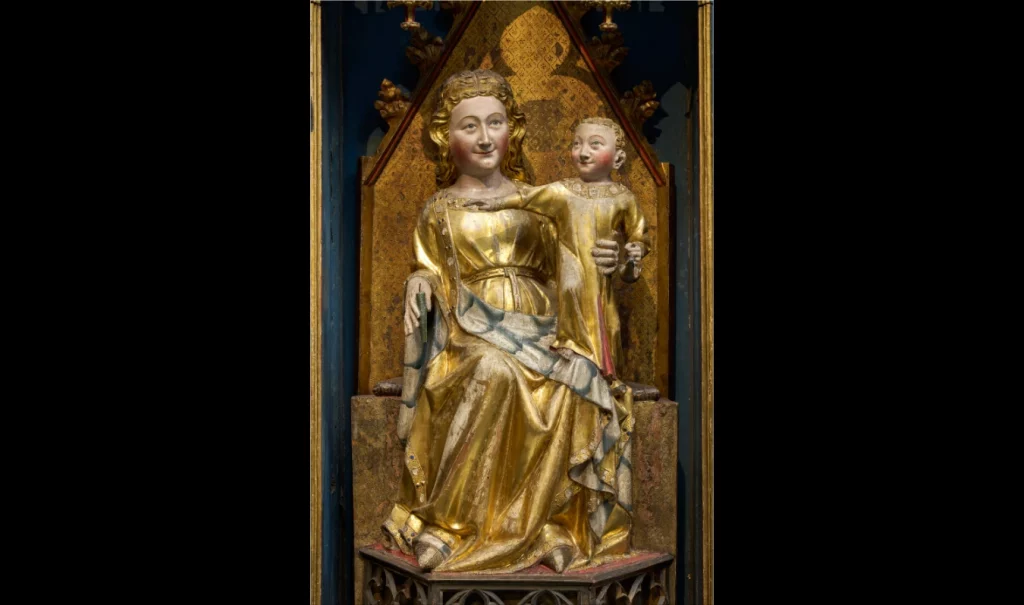
Enthroned Virgin and Child, Cologne, c. 1320/1330
Hardwood, polychromy, 132 × 60 × 33 cm
Acquired in 2026 with the support of the Cultural Foundation of the German Federal States and by Traute Kirchholtes. Jointly owned with the Ernst von Siemens Art Foundation and the Städel Museum Association.
Photo: Städel Museum – Norbert Miguletz
My great-great-grandfather, founder of the Julius Böhler art dealer dynasty, was not only a particularly successful dealer, but also a passionate collector. Many of the works of art he acquired at the beginning of the 20th century are now in the collections of major German museums on loan. Until recently, the Altenberg Madonna was one of those.
This Marian figure has a long story that I would like to tell. It begins in the Premonstratensian monastery of Altenberg near Wetzlar an der Lahn. Gertrude of Thuringia was abbess here from 1248 until her death in 1297. As the daughter of Saint Elisabeth of Thuringia (1207-1231), she founded the relic cult around her famous mother in Altenberg. The house monastery of the Hessian-Thuringian landgrave family became a central place for the cult of the saints.
A “Gesamtkunstwerk”
After the death of Abbess Gertrud, the monastery commissioned a magnificent, three-part altarpiece around 1330. In the five-axis central part, decorated with tracery, there is a central niche for the sculpture of the enthroned Madonna and compartments for the relics of St. Elizabeth. The two side wings show scenes from the lives of Mary and St. Elizabeth. All parts of the altar relate to each other thematically and iconographically: the ermine lining of Mary’s cloak recurs in Elizabeth of Thuringia’s clothing donation on the right side wing.
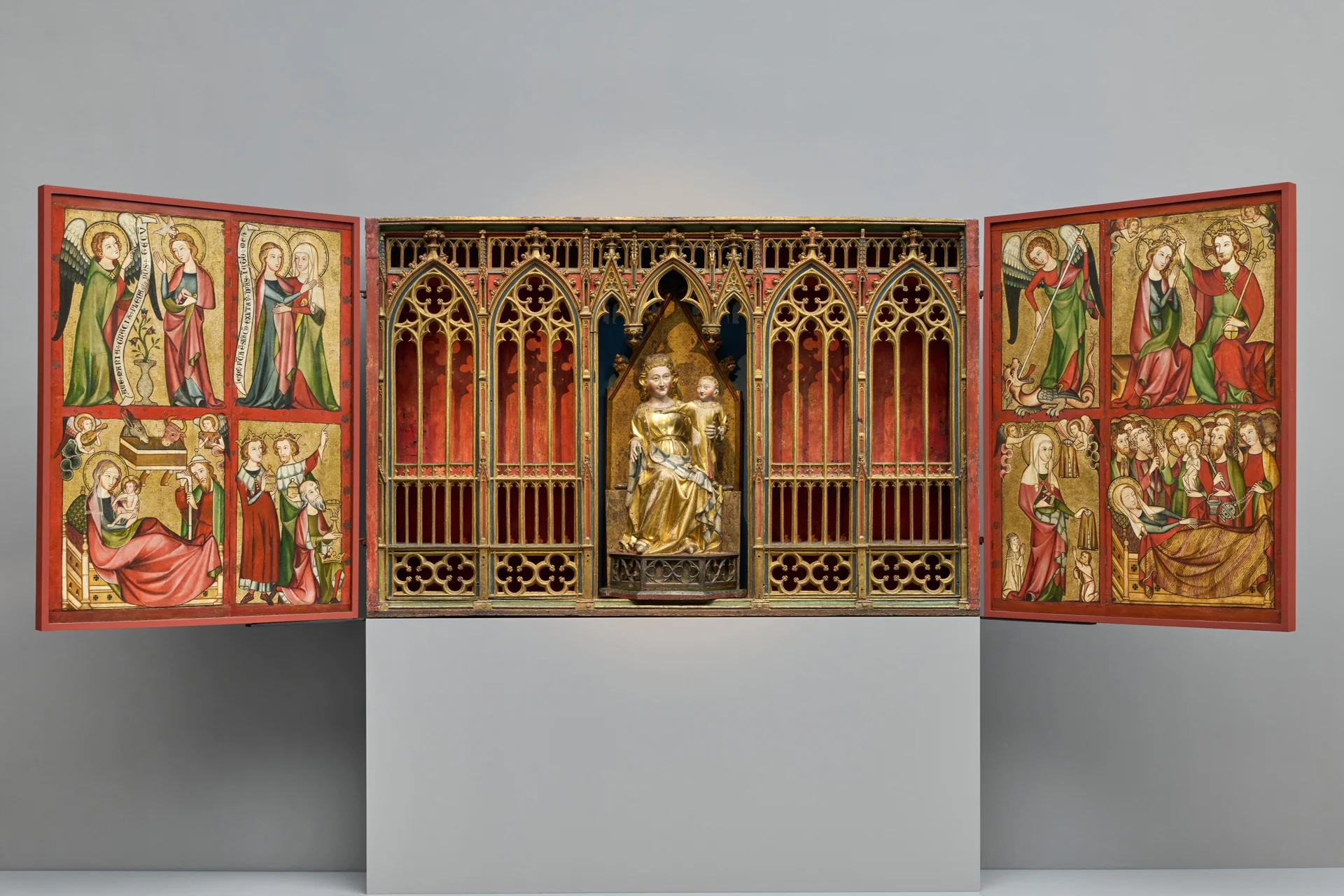
Altenberg Altar, c. 1330, Enthroned Virgin and Child
Cologne, c. 1320/1330 mixed media on fir wood
153.7 x 24.8 x 6.3 cm
Foto: Städel Museum – Norbert Miguletz
The Madonna’s robe and hair, covered with gold leaf, were related to the gold-plated reliquary vessels that no longer exist. This also included the famous arm reliquary of St. Elisabeth, around 1240, now in Sayn Castle.
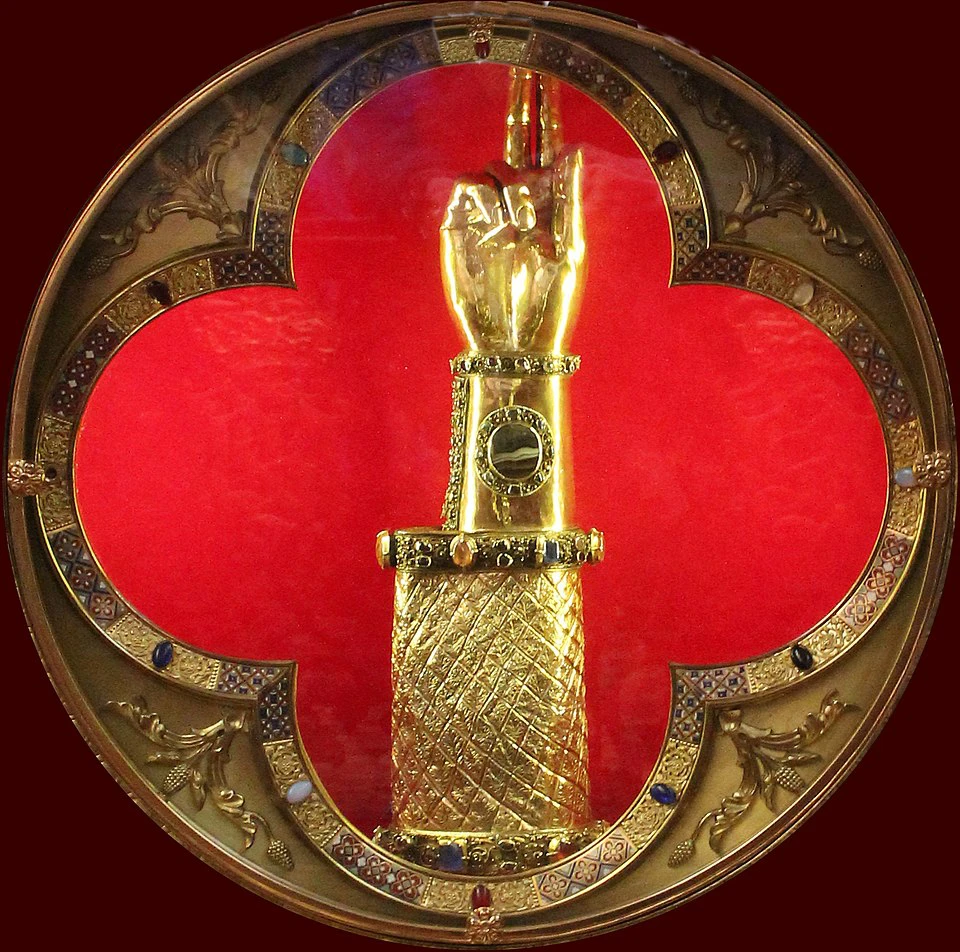
Armreliquie der hl. Elisabeth, Schloss Sayn, Sayn
The altarpiece was dismantled as early as the 15th or 16th century because it apparently no longer corresponded to contemporary taste. After the monastery was dissolved in 1803, it was transferred to the castle of the Princes of Solms-Braunfels. In 1916, Georg Friedrich Prince Solms-Braunfeld (1890-1970) sold the Madonna figure to the renowned Munich art dealer A.S. Drey, where my great-great-grandfather acquired it before 1925 (this is evident from a loan request on the occasion of the “Millennium Exhibition” in Cologne in 1925). The two altar wings were purchased by the Städel Museum, Frankfurt in 1925; only the altar shrine remained with the family of the Solms-Laubach princes.
In 1934 my family sent the Altenberg Madonna to my great-grandfather Julius Wilhelm Böhler’s art shop in Lucerne, Switzerland, where it remained until the end of the war. In 1955 the Madonna was entered into the “Directory of Nationally Valuable Cultural Assets”, which took into account her outstanding art-historical significance. In 1981 we finally made the Altenberg Madonna available on permanent loan to the Bavarian National Museum in Munich.
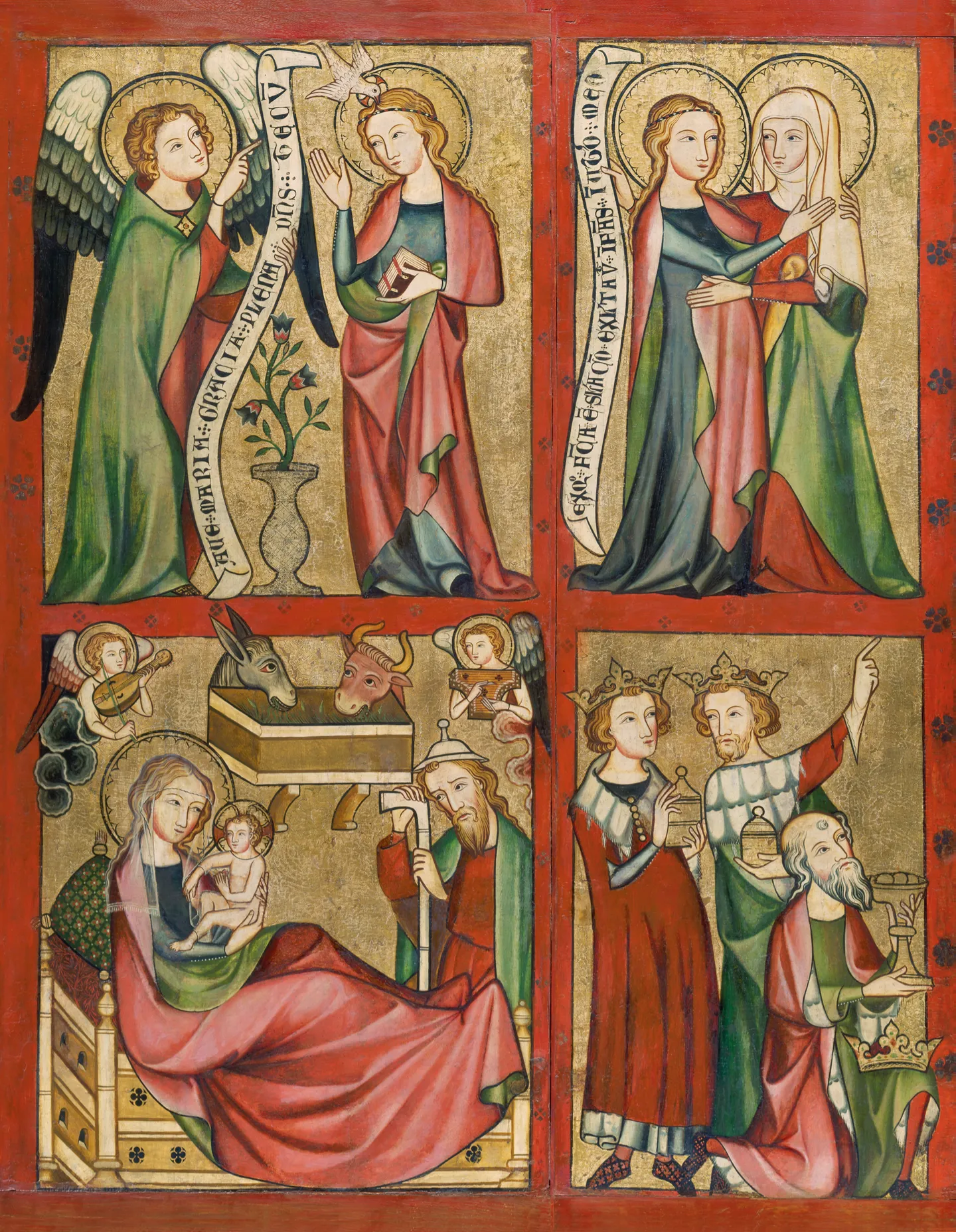
View of the inside of the left wing, from top left:
– Mary Annunciation
– Visitation of Mary
– Nativity
– Adoration of the Magi
© Städel Museum, PDM-owner, via Wikimedia Commons
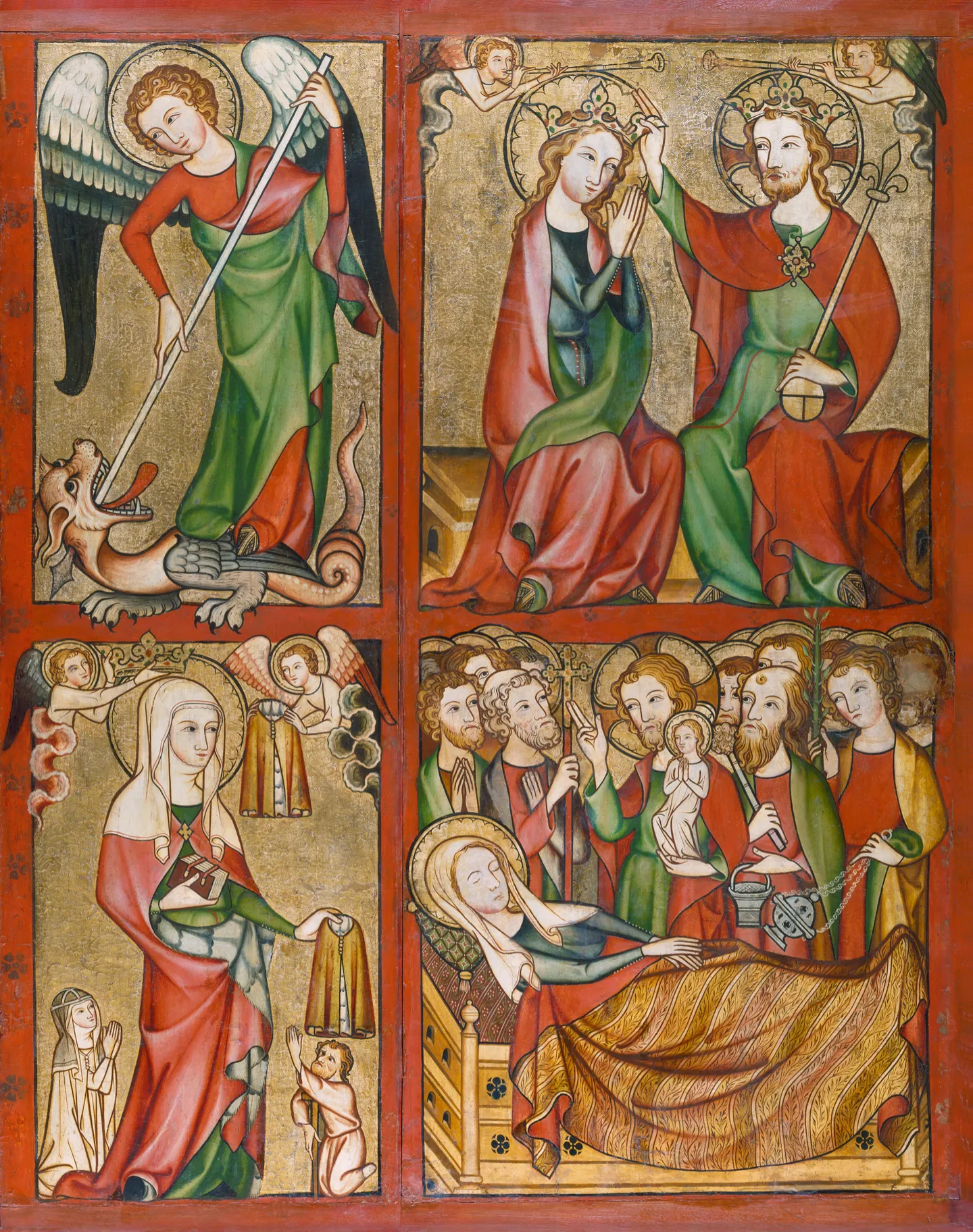
View of the inside of the right wing, from top left:
– Archangel Michael
– Coronation of Mary
– St. Elizabeth
– Death of Mary
© Städel Museum, PDM-owner, via Wikimedia Commons
The Städel Museum in Frankfurt has owned the two altarpieces since 1925, and the associated altarpiece has been on permanent loan since 2014. All that was missing was the Madonna. This gap is now closed. On January 27, 2026, the official day of the handover, Städel director Philipp Demandt described the purchase of the Madonna from our collection, which was achieved through a concerted effort by the Städel Museum Association, the Ernst von Siemens Cultural Foundation and the Cultural Foundation of the States, as a “great moment” and said that it was “the most important acquisition of a single sculpture in the history of the museum.” Dr. Jochen Sander, curator of the Städel Museum and deputy director, described the Altenberg Altar, one of only five preserved from Northern Europe from this period, as having unique art-historical significance. Christiane Regus, Secretary General of the State Cultural Foundation, was also full of praise that day and called the Altenberg Madonna “one of the most important works of her time”.
So the story of the Madonna has come to a good end. On January 27th in Frankfurt I was happy to know that she was now in perfect hands, in a kind of family reunion, as the Frankfurter Allgemeine Zeitung wrote, on the second floor of the wonderful Städel Museum.